
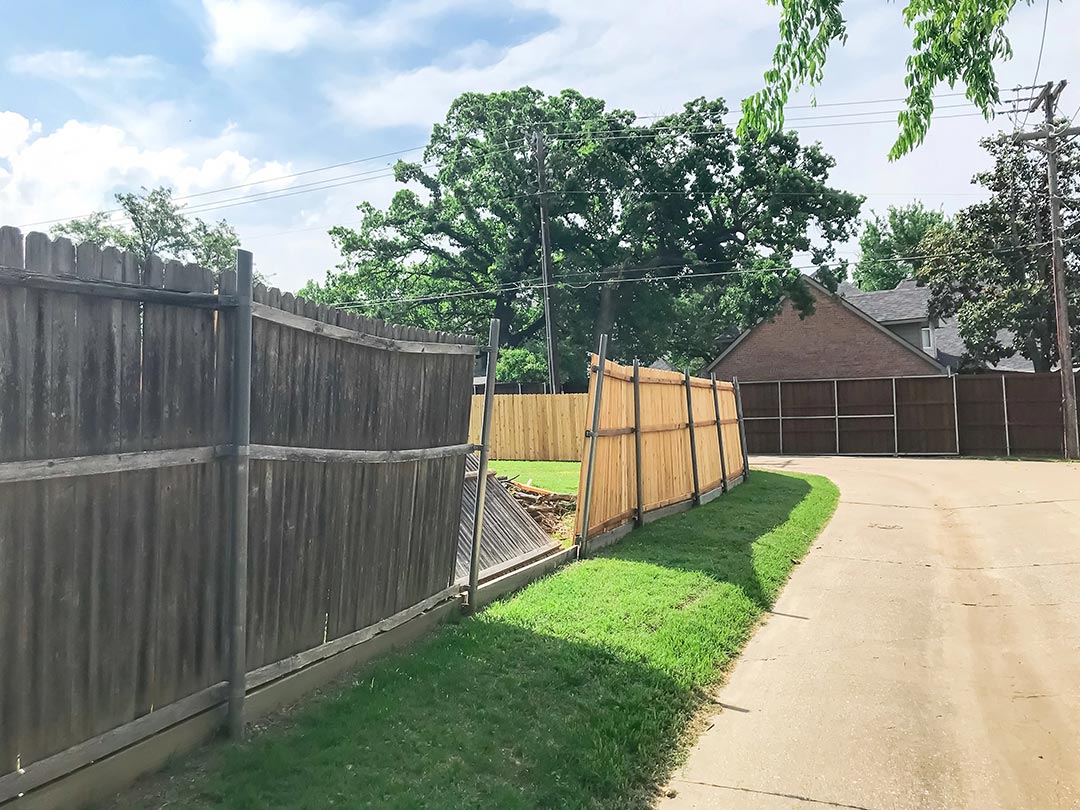
Fencing and decking replacement – When homeowners start noticing problems with their garden boundaries or outdoor surfaces, it’s often a sign that the fence, panels, deck, or supporting posts are beginning to fail. Wear and deterioration can happen slowly, especially when exposed to weather, sun, and high winds. Understanding what to look for helps you spot issues early and protect your outdoor space before repair costs rise. This blog covers the most common reason your fencing and decking show problems and offers a clear solution for each.
1. Rattling Fence Panels & Excess Movement & Storm Damaged Fencing
One of the clearest indications that your fence panels need attention is noticeable rattling during strong winds. If your panels shake, clatter, or shift, it often means the fence panels rattle because the fixings or concrete posts have weakened. In many gardens, people want to know how to stop fence panels rattling, and fortunately, there are several ways to reduce movement while keeping the structure stable.
Loose fittings, worn brackets, or aging wooden materials can all lead to movement. Adding clips, wedges, or shims can prevent rattling, but if the posts themselves are damaged, you may need to switch to concrete fence posts or reinforced concrete posts for strength.
2. Panels Leaning, Bowing or Sagging
A leaning fence often points to issues below ground. Weak soil, waterlogged ground, or rotting posts cause the entire structure to tilt. Once the panels start to bow, sagging becomes more noticeable, especially after storms or strong winds. If this continues, the pressure can cause nails and screws to pull out of place, worsening gaps and instability.
While minor leaning can sometimes be corrected, in many cases you must replace sections before the risk becomes greater. Repairs are more cost effective when caught early, and replacing just only a couple of damaged parts can add years to your fence line.
3. Gaps Growing Between Loose Fence Panels
Expanding gaps between panels are a typical common reason people seek fencing repairs. Temperature changes cause materials to expand, shift, and eventually separate. Over time, moisture, wind, and general wear open up visible spaces that reduce privacy and security.
Depending on the length of your fence run, these gaps can compromise the entire boundary. Adding support brackets, wedges, or new fixings can help, but if the underlying wood is damaged or the posts are weakened, replacing full sections is often the best solution. This can even be an issue with loose fence panels in concrete posts.
looking for Fencing Repairs or replacement?
4. Deck Boards Warping, Loose, Lifting or Splitting
On decking surfaces, warped decking boards and loose deck boards are among the clearest signs decking needs replacing. When wood absorbs moisture, it begins to warp, twist, bow, or lift, creating an uneven surface. These issues also affect safety, as raised edges create trip hazards.
You may be able to fix warped deck boards if the damage is minor, sometimes by using a clamp, extra screws, or careful reshaping to straighten affected areas. However, if the deck board damage is widespread, you’ll likely need to replace multiple boards.
Modern homeowners often choose a composite deck because it handles weather, sun, and foot movement better than natural wood. Composite materials also minimise long-term tear, wear, and the need for frequent maintenance.
looking for Decking repairs or replacement?
5. Loose Nails, Screws and Fasteners Pulling Free
If you notice nails, screws, or other fasteners beginning to pop, lift, or pull away from the frame, it can indicate structural fatigue. Decking subframes rely on every joist, fixing, and support point being tight and secure.
Sometimes tightening can solve the problem, knowing when to tighten and when to replace is key. Re‑securing components is a simple fix, but when the same issues reoccur, it may mean deeper movement in the deck structure.
6. Rotting Wood and Soft Spots
Any soft, spongy, or discoloured wooden sections are often beyond saving. Decking and fencing made from natural material, such as cedar or treated softwood, will eventually degrade, especially in damp UK climates.
If decay appears across multiple areas rather than only a couple, your best course of action is to replace the affected deck or fence components. Signs of rot indicate that the timber has weakened to the point where it no longer provides adequate support.
7. Boards Lifting Due to Moisture, Pressure, or Movement
Sometimes pressure from movement, moisture, and shifting ground levels force a board or several boards to lift. This may occur along the floor of the decking or at the perimeter where rails and edging are attached.
As decking ages, the most common reason for lifting is the gradual loosening of fixings combined with seasonal expansion. You may be able to fix sections by refitting boards, adjusting space, and securing them firmly, but frequent lifting usually means underlying framing issues.
8. Deck Structure Weakening Over Time
The decking structure underneath is just as important as the surface. If you notice bouncing, instability, or noisy movement along the length of the deck, your supporting joist system may be failing.
Age and prolonged exposed conditions lead to weakened posts, joists, and frame sections. Once deterioration begins, the risk increases quickly because every component depends on the next. It’s essential to check whether the rest of the frame remains intact; if not, a full replacement is the safest solution.
9. Older Fences Showing Age or Material Failure
Older fencing uses a wide range of materials, including cedar, treated pine, or mixed wood panels. As they age, they become vulnerable to wind, rain, and soil shifts. Even repairing only a couple of panels sometimes can’t restore full stability.
If your fence has multiple weakened sections, failing posts, or large loosened gaps, it is likely time to complete a proper replacement. Modern fencing gives better longevity and far better resistance against high winds and weathering.
10. Why Replacement May Be the Best Long‑Term Option
For both decks and fences, there comes a point when patches and repairs no longer hold. If you notice repeated rattling, cracks, movement, sagging, or warped areas, replacing the affected parts with stronger materials can restore safety and visual appeal.
Choosing durable solutions such as a composite deck, new concrete supports, or reinforced posts can significantly extend lifespan while reducing future maintenance needs. You’ll achieve a more stable, long-lasting structure designed to withstand wind, moisture, and the everyday demands of family life.
Final Thoughts
Your fencing and decking play a major role in creating a safe and attractive outdoor space. By keeping an eye on rattles, warping, board lifting, and failing fixings, you can address small problems early and avoid larger repair costs later. Whether you choose to repair or fully replace worn elements, maintaining your outdoor structures ensures they remain safe, reliable, and visually clean for years to come.
If you fencing and decking is in need of reapir or repalcement please contact us for a free quote.